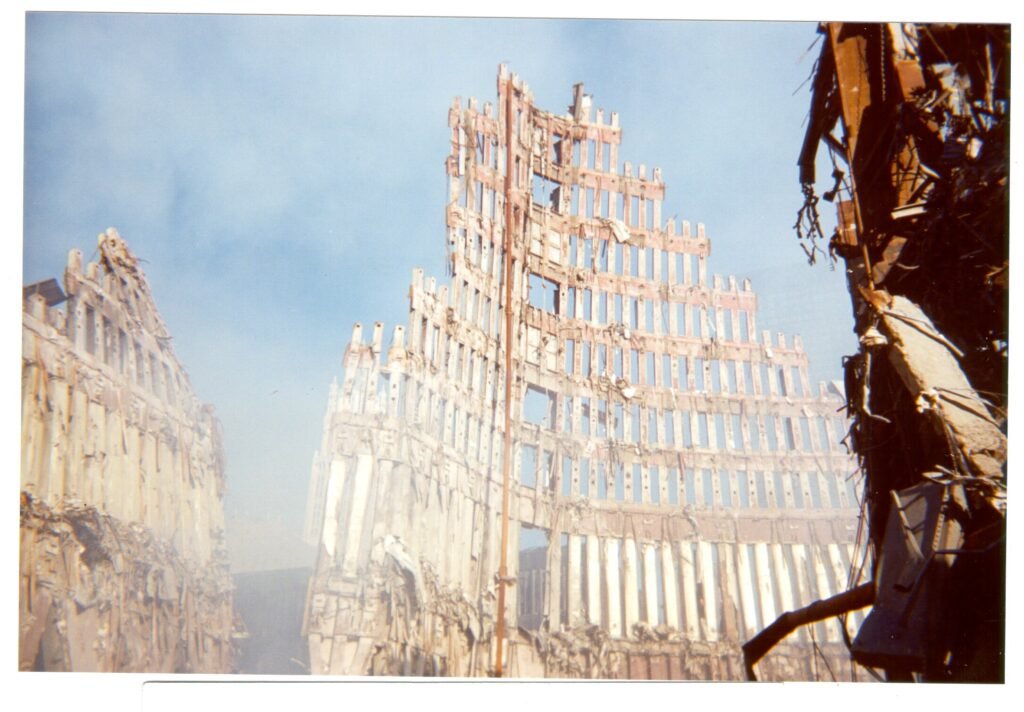
Photo by Rod Millner
On September 11, 2001, everything changed.
Rod Millner was in upstate New York preparing for a world-record skydiving attempt when he heard a call over the radio:
Volunteers with construction experience were needed in New York City.
He didn’t hesitate.
Answering the Call
Rod knew it would be intense.
But he also knew he had skills that could help — and that was enough.
He made his way to what would become known as Ground Zero, stepping into one of the most challenging environments imaginable.
Seeing What Others Missed
On his first night, one problem stood out immediately.
The search and rescue lighting was severely lacking.
Firefighters, police, and paramedics were working under layers of rubble with minimal visibility — using flashlights in one hand while trying to search with the other.
It was slow.
It was dangerous.
And it didn’t have to be that way.
Taking Action
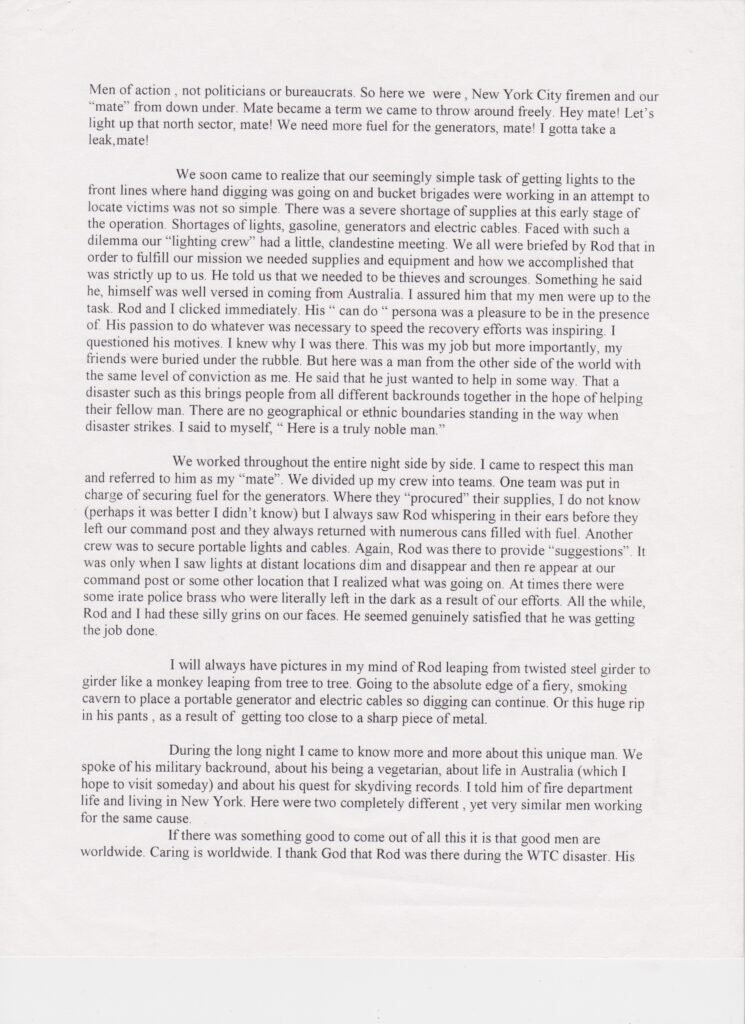
Rod found an unused generator and set up a makeshift lighting system using high-powered lamps and extended cabling.
The impact was immediate.
In just one area:
- Firefighters could finally see clearly
- Both hands were free to work
- Search speed increased
- Safety improved dramatically
What started as initiative quickly became essential.
From Volunteer to Leader
At first, no one knew who Rod was.
But they knew one thing — he was making a difference.
“Hi, I’m Rod — the lighting guy. Where are you searching tonight?”
Within days, he was assigned platoons of New York firefighters.
He trained them to set up and optimise lighting systems across multiple search zones — improving efficiency and safety across the operation.
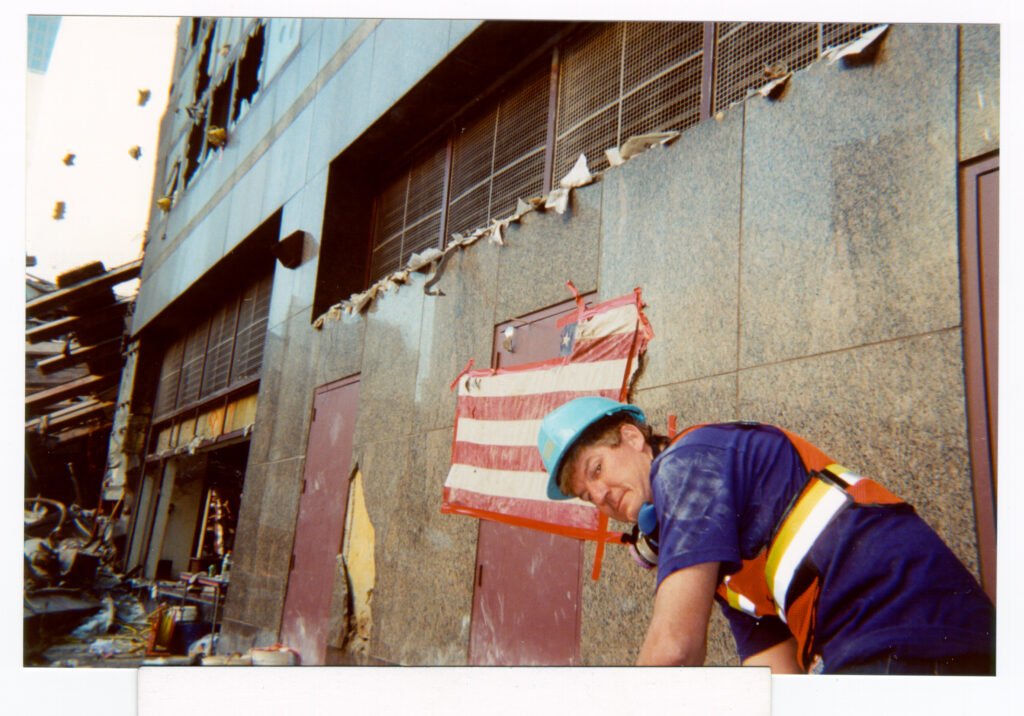
Amid the devastation, there were moments that stayed forever.
When a damaged American flag was recovered from the rubble — still showing a single star — it became a symbol of resilience.
When it was raised, a wave of emotion moved through everyone present.
There was exhaustion, grief, and intensity…
But also, leadership, unity, and people stepping forward without hesitation.
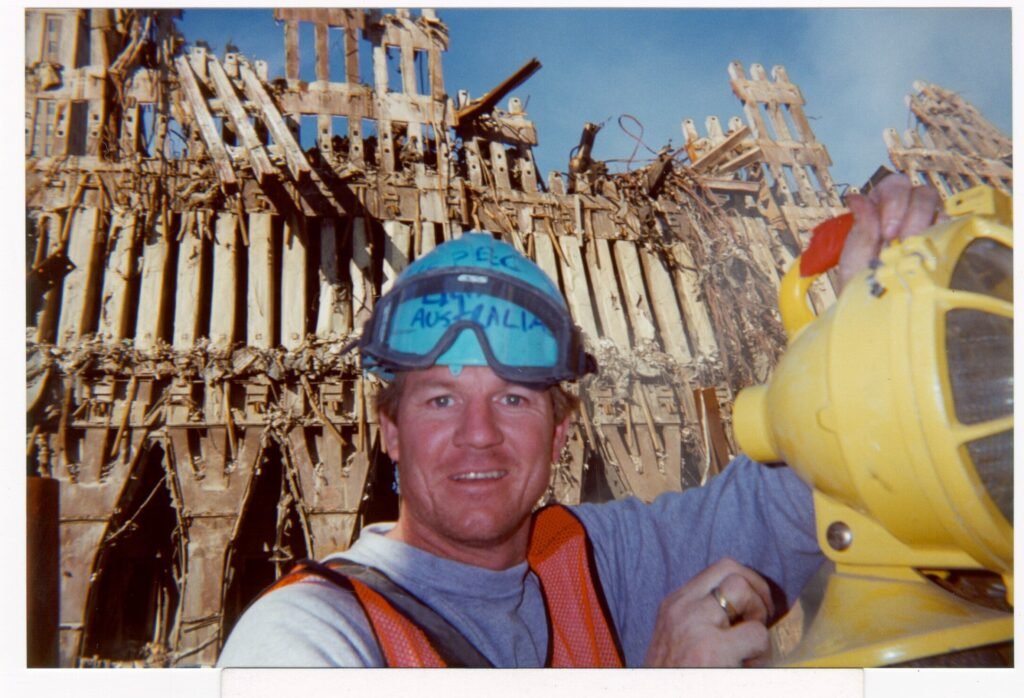
Pushing Through
Rod worked day and night with little sleep, driven by a simple goal:
Help in any way possible.
He continued until, seven nights in, a steel shard hidden in the rubble pierced his right knee — forcing him to stop.
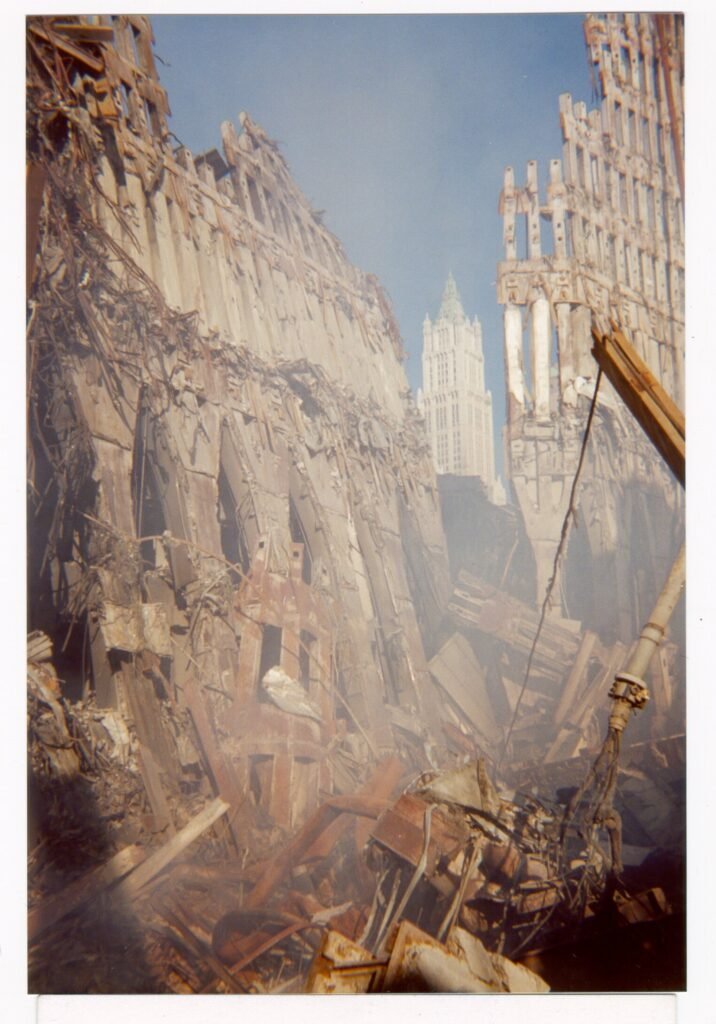
Job Done
As he left, something stayed with him.
For the first time, he heard firefighters calling out for generators in new search areas.
The system had spread.
The impact remained.
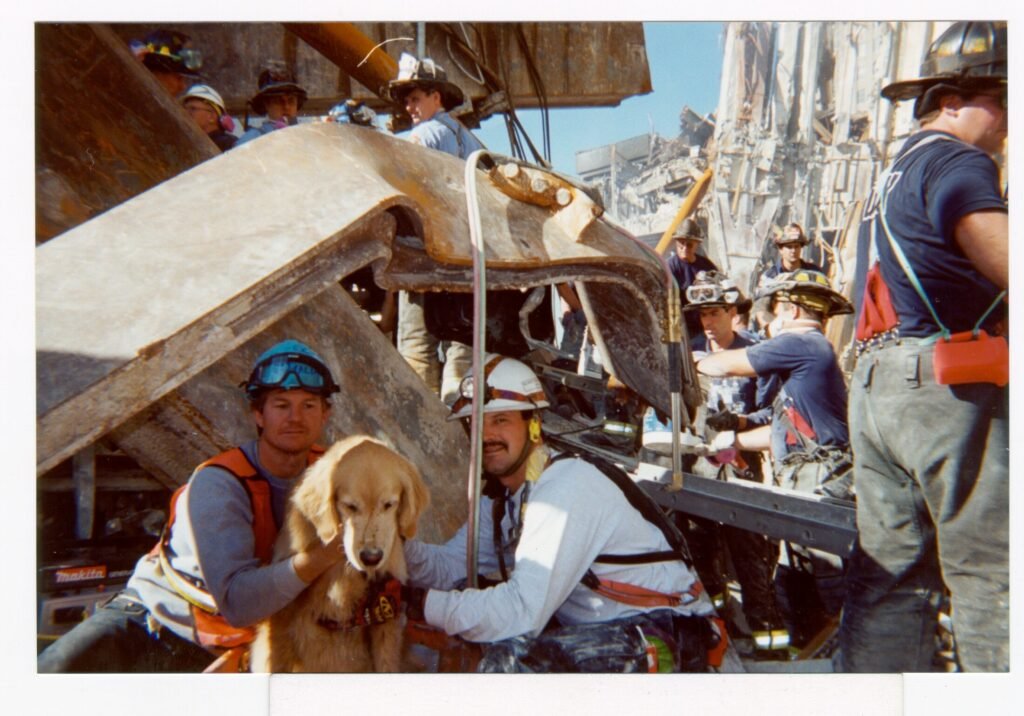
Recognition
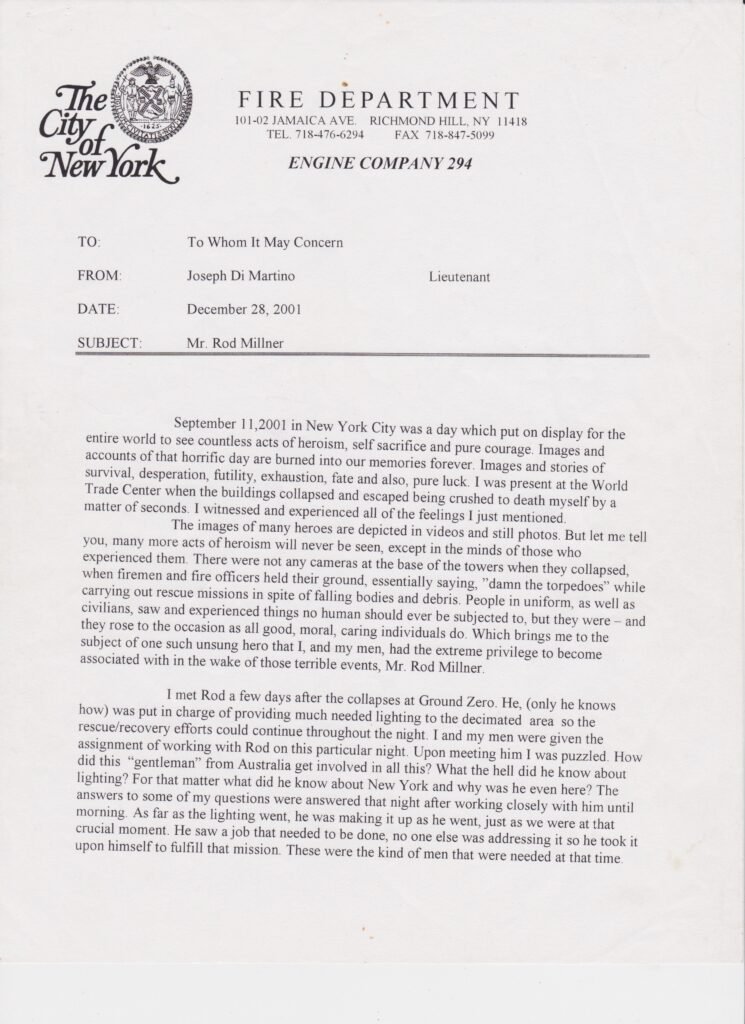
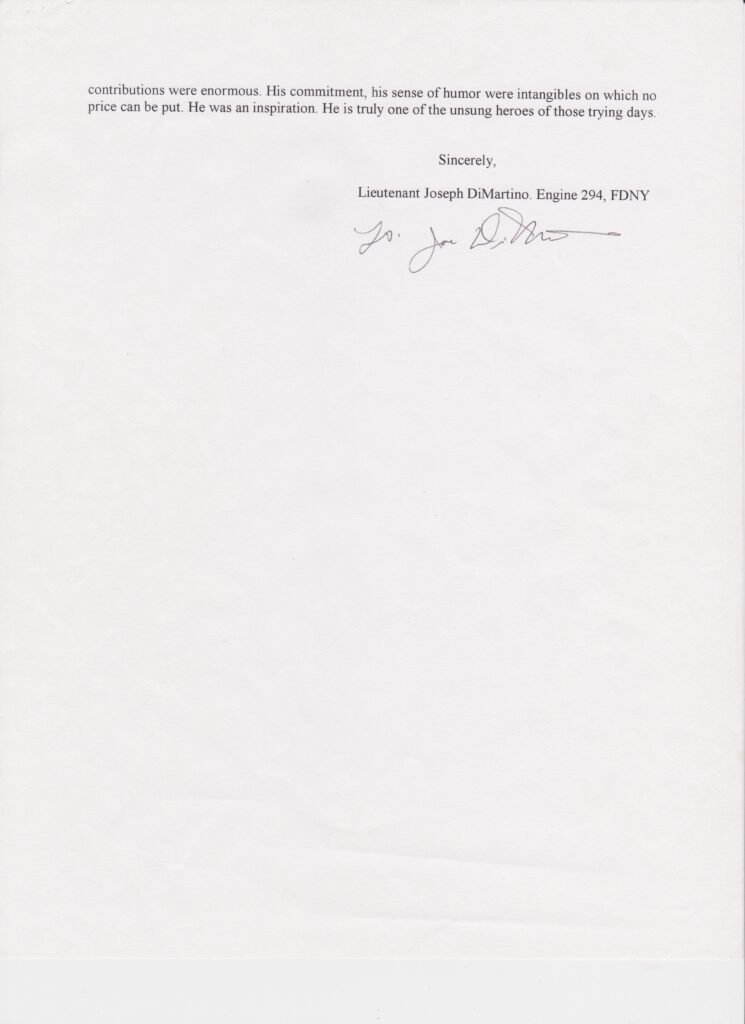
“Here is a truly noble man.”
— Lieutenant Joseph Di Martino, NYFD
Below is a letter from Lt. Di Martino, who led the first platoon Rod trained and directed in emergency rescue lighting.